Find Expert Teeth Doctor Services: Endodontist Near Me for Root Canal and Emergency Care
Find Expert Teeth Doctor Services: Endodontist Near Me for Root Canal and Emergency Care
By Zainab Aziz, Anodyne Endodontics
Choosing a skilled endodontist matters for complex care like root canals and dental emergencies. This guide explains what endodontists do, how root canal treatment works, and how to get timely emergency care. If you’ve had a severe toothache or dental trauma, these steps will help you find expert care quickly and with confidence.
Key Takeaways
- Endodontists specialize in diagnosing and treating dental pulp issues, including root canals and dental trauma.
- Root canal treatment involves cleaning infected pulp, disinfecting canals, and sealing with biocompatible materials.
- Emergency dental care requires immediate action for severe pain, swelling, or traumatic tooth injuries.
- Same-day dental appointments provide timely relief, infection control, and improved recovery outcomes.
- Dental referral services enable coordinated care between general dentists and endodontists for complex treatments.
- Collaborations between general dentists and endodontists enhance patient care through shared expertise and coordinated plans.
- Root canal treatment costs vary widely, and insurance coverage or financing options can help manage expenses.
- Modern root canal procedures minimize pain and typically last between 60 to 90 minutes.
- Scheduling consultations with an endodontist involves contacting the office, providing dental history, and confirming appointment details.
What Does an Endodontist Near Me Specialize In?
Endodontists focus on treating the dental pulp—the tooth’s inner tissue. After extra specialist training, they handle root canals, retreatments and dental trauma with precision. Their skills help save teeth that might otherwise be lost. Many use advanced techniques and prioritise patient comfort to keep treatment as pain-free as possible. If you’re experiencing tooth pain, swelling or injury, knowing how to reach an endodontist fast is key.
To get personalised care, book a consultation with an endodontist who can map the best treatment for your case. Anodyne Endodontics handles consultations via their dedicated line at (659) 266-3963 (659-266-3963) to discuss your situation.
Understanding Root Canal Treatment Procedures
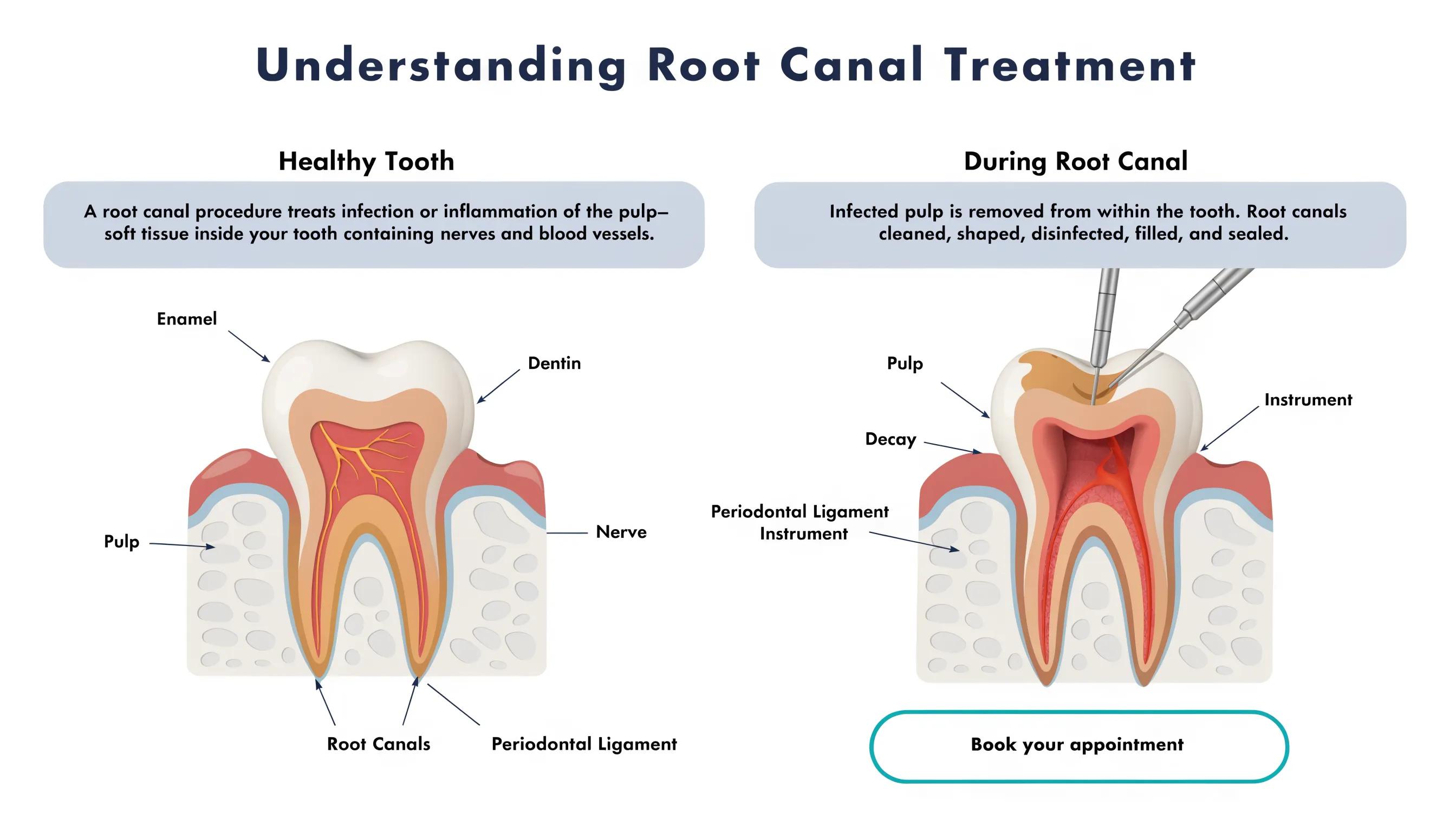
A root canal saves a badly infected or decayed tooth. The endodontist uses X-rays to see the canals, numbs the area, then opens the crown to remove infected pulp. They clean and shape the canals, disinfect them, fill them with gutta-percha and seal the tooth.
After treatment, follow your endodontist’s care instructions to support healing. Keep the area clean, attend follow-up visits and report any unusual pain or swelling so complications can be avoided.
How to Get Emergency Dental Care from a Teeth Doctor Quickly?

Emergency dental care should be sought right away for severe pain or trauma. If you notice intense pain or swelling, call an endodontist or emergency dental clinic and explain your symptoms.
When you call, be ready to describe your symptoms, share medical details and follow any pre-visit guidance to speed up care.
- Describe Symptoms: Clearly articulate your symptoms to the receptionist or doctor. This clarity helps them prioritize your appointment based on urgency.
- Prepare Documentation: Keep crucial health information handy to expedite the intake process.
- Follow Instructions: Adhere to any pre-visit instructions provided, such as avoidance of food and drink before treatment.
A supportive practice like Anodyne Endodontics can walk you through each step and help arrange fast care at (659) 266-3963 (659-266-3963).
When Should You Seek Same Day Dental Appointment for Emergencies?
Certain signs mean you should seek same-day dental care.
- Severe Pain: If you experience intense, persistent tooth pain that disrupts your daily activities.
- Swelling: Noticeable swelling around the gums or face can indicate an infection or abscess that requires urgent treatment.
- Traumatic Injury: Accidents that lead to tooth fractures or loss need immediate evaluation to determine the best course of action.
Acting quickly can often save the tooth, reduce pain and lower the risk of complications.
What to Expect During Emergency Dental Visits?
An emergency visit starts with a focused exam and diagnosis. The clinician will review your symptoms, medical history and past dental work to pinpoint the problem.
Depending on findings, treatment may include X-rays, an immediate procedure like a root canal or extraction, and scheduling follow-up care.
- X-rays: To assess any hidden problems beneath the gums.
- Immediate Treatment: Such as a root canal, tooth extraction, or other urgent care.
- Follow-Up: If further treatment is needed, a follow-up appointment will be scheduled to ensure all issues are resolved.
Knowing the typical steps ahead of time helps reduce anxiety and lets you prepare for the visit.
How Can I Schedule a Consultation with an Endodontist Near Me?
Booking a consultation is straightforward: find qualified local specialists and choose one with a clear reputation for endodontic care.
Use these steps to book your appointment:
- Contact the Office: Reach out via phone to determine availability.
- Provide Information: Be ready to furnish details regarding your dental history and current symptoms.
- Choose an Appointment Time: Work with the scheduling staff to find a time that suits your availability.
Direct access to an endodontist improves your care. Call Anodyne Endodontics at (659) 266-3963 (659-266-3963).
Step-By-Step Process to Book Your Dental Appointment
A structured approach speeds up booking. Use this quick guide.
- Gather Personal Information: Have your insurance details, medical history, and any symptoms documented for the visit.
- Make the Call: Contact the endodontist’s office directly, asking about available times and specific services.
- Confirm Your Appointment: After setting a date, ensure you receive a confirmation email or message detailing the appointment specifics.
Following these steps saves time and helps you focus on getting the treatment you need.
What Are the Benefits of Same Day Appointments?
Same-day appointments deliver fast relief and practical benefits when problems are urgent.
- Timely Relief: Quick treatment can alleviate severe pain and discomfort without delay.
- Infection Control: Addressing dental issues rapidly reduces the risk of infections exacerbating.
- Enhanced Recovery: Early interventions generally yield better outcomes, preserving more of your natural tooth structure.
They offer fast, effective care so you feel supported and recover sooner.
What Are Dental Referral Services and How Do Teeth Doctors Collaborate?
Referral services connect general dentists with specialists like endodontists when cases need advanced care.
Referrals make it easier to get the right specialist quickly.
- Streamlined Treatment: Patients can navigate their treatment plans efficiently under coordinated care.
- Comprehensive Care: Collaboration between dentists ensures thorough evaluations and management of any dental issues.
- Patient Support: Having a supportive network aids in educating patients about their treatment options and addressing concerns.
Knowing how referrals work ensures coordinated care and helps you move smoothly through treatment options.
How General Dentists Can Refer Patients to a Root Canal Specialist
General dentists often refer complex cases to endodontists. The referral usually starts after an initial assessment and includes sharing case details and helping patients with scheduling and insurance.
- Assessment: General dentists evaluate the patient’s condition to determine the need for a specialist.
- Communication: They reach out directly to the endodontist to discuss the patient’s case and share relevant information.
- Patient Coordination: General practices often assist patients with scheduling and navigating insurance matters to ensure smooth transitions.
These steps help patients transition smoothly and keep care consistent throughout treatment.
Benefits of Partnerships Between General Dentists and Endodontists
Close partnerships between general dentists and endodontists improve outcomes by combining broad dental knowledge with specialist skills.
- Enhanced Patient Care: Patients receive a comprehensive approach to dental health, with specialists bringing advanced techniques to treatment.
- Shared Expertise: Dentists work together to leverage their unique skills, providing a well-rounded perspective on patient needs.
- Coordinated Care Plans: Treatment plans are tailored with input from both providers, ensuring all aspects of a patient’s dental health are considered.
This teamwork builds trust and offers patients a comprehensive, coordinated treatment plan.
What is the Cost of Root Canal Treatment and Insurance Coverage Options?
Root canal costs vary by location, case complexity and provider. Typical ranges run from $300 to $2,500 per tooth.
Insurance often covers part of endodontic treatment. Check your plan and explore financing if needed.
- Check Your Plan: Verify what your dental insurance covers before proceeding with treatment.
- Financing Options: Many dental offices offer financing plans to help manage out-of-pocket expenses.
- Consultation Costs: Initial consultations might be covered, but verify to avoid unexpected fees.
Knowing expected costs and coverage options helps you plan and avoid surprises.
Common FAQs About Visiting a Teeth Doctor for Root Canal and Emergency Care
Here are answers to common questions about pain, timing and what to expect from an endodontist visit.
Does Root Canal Treatment Hurt and What is the Duration?
Modern anesthesia and techniques keep pain to a minimum during root canals. Most people report little to no pain during the procedure. Typical appointments last about 60 to 90 minutes, depending on complexity.
How Quickly Can I See an Endodontist for a Dental Emergency?
In a dental emergency, many endodontists can see you within hours, especially for urgent cases. Quick care reduces the risk of lasting damage.
Frequently Asked Questions
What Are the Signs That I Need to Visit an Endodontist?
Persistent tooth pain, swollen gums, lingering sensitivity to hot or cold, tooth discolouration or a small bump on the gum are common signs that you should see an endodontist.
Are There Any Risks Associated with Root Canal Treatment?
Root canals are generally safe but can carry small risks like infection or incomplete cleaning. Skilled endodontists minimise these risks—follow pre‑ and post‑treatment instructions to help ensure a good outcome.
How Does One Prepare for a Root Canal Procedure?
Prepare by sharing your full medical history and current medications. You may be asked not to eat or drink for a few hours beforehand, and it’s wise to arrange transport home if you’ve had local anaesthetic.
What Should I Do After a Root Canal Treatment?
After a root canal, follow your endodontist’s care plan: take prescribed medications, avoid chewing on the treated tooth until it’s restored, and keep good oral hygiene. Book follow‑ups to track healing.
Will I Need Additional Treatments After a Root Canal?
Many patients need a crown or permanent filling after a root canal to protect the tooth and restore function. Your endodontist will recommend the best next steps for your case.
What Should I Look for When Choosing an Endodontist?
Look for qualifications, experience, patient reviews and modern techniques. Also consider how comfortable you feel during your first visit—clear communication matters.
Conclusion
Choosing a qualified endodontist ensures effective care for emergencies and root canals. Quick access to specialist treatment can reduce pain and protect your teeth. For information or support, contact Anodyne Endodontics at (659) 266-3963 (659-266-3963) to schedule a consultation.