
When to See Endodontist: When to See an Endodontist: Key Signs
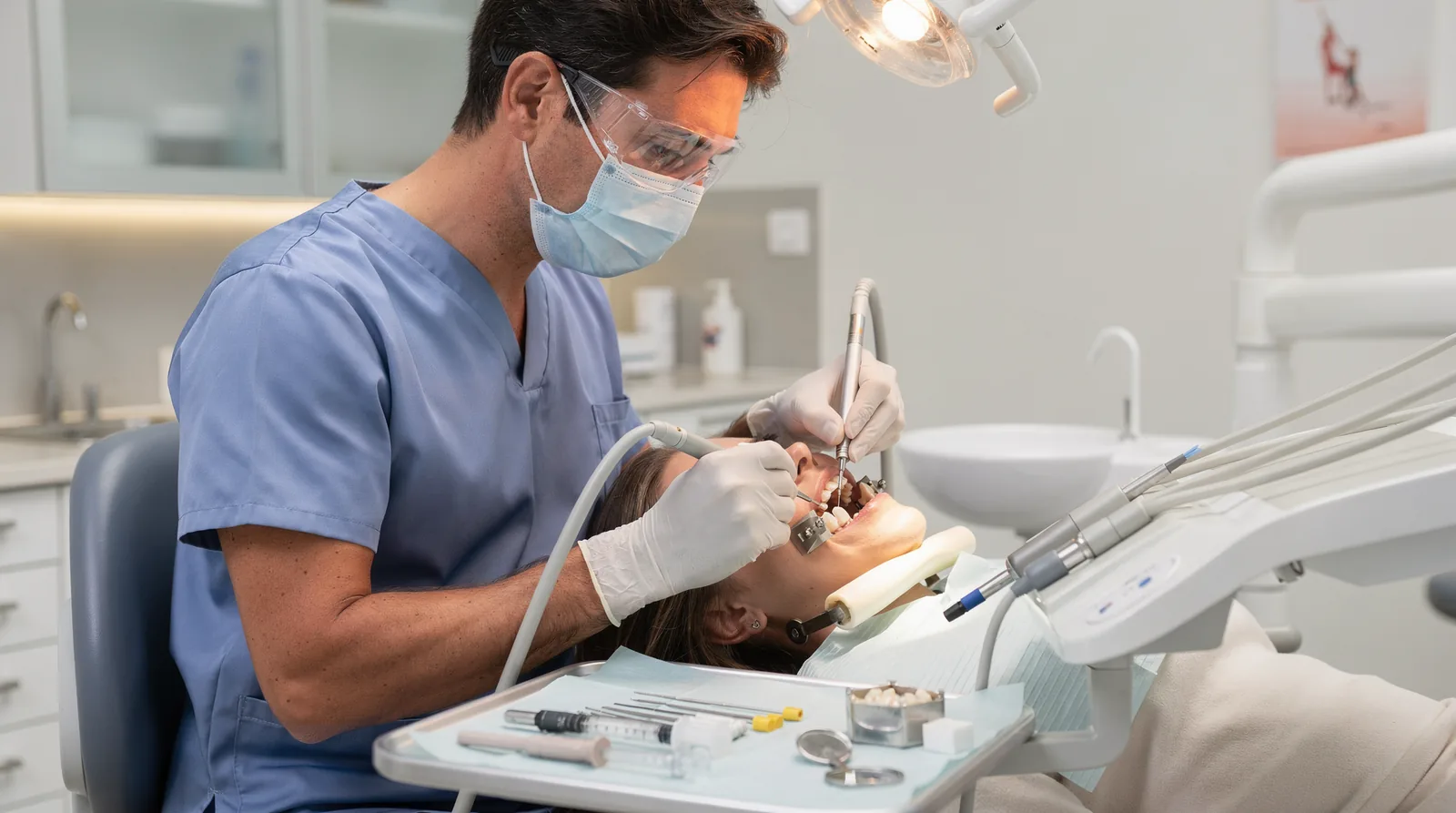
Referral to a board-certified endodontist happens when your pain signals complex root canal anatomy, persistent infection, dental trauma, or a failed prior root canal needing retreatment. General dentists handle routine cases, but endodontists like Dr. Zainab Aziz at Anodyne Endodontics complete additional specialty training and use advanced technology daily, giving you precise diagnosis, pain-free treatment, and a far stronger chance of saving your natural tooth.
Key Takeaways
- Endodontists complete at least two extra years of specialized training beyond dental school in pulp treatment.
- Dentists refer complex cases involving dental pulp and root tissues to endodontists for specialized expertise.
- Referrals indicate your dentist prioritizes your dental health by matching your case to appropriate specialist skills.
- Endodontists focus exclusively on saving natural teeth through advanced root canal treatment and pulp therapy techniques.
What Does an Endodontist Actually Treat?
Dental pulp problems sit at the center of endodontic care. An endodontist is a dental specialist whose entire practice focuses on complex issues affecting the pulp, the soft tissue packed with nerves and blood vessels deep inside each tooth. When decay, cracks, or trauma reach that inner layer, you need someone trained specifically for that terrain.
Getting there takes more than dental school alone. Endodontics is recognized by the American Dental Association as a specialty. It requires an additional two or more years of graduate-level training beyond a general dentistry degree. That extra training is why only a small percentage of dentists go on to practice endodontics full time, just 3 percent, according to the American Association of Endodontists. The result: a clinician who spends years narrowing focus to one part of the tooth instead of spreading attention across every dental procedure.
What conditions fall under an endodontist’s care?
Pulp inflammation, infection, abscesses, and persistent nerve pain all fall squarely within this scope. A board-certified endodontist’s clinical focus centers entirely on diagnosing and treating these pulp-related conditions, rather than fillings, cleanings, or cosmetic work.
Is this different from what my general dentist treats?
Yes. General dentists handle broad oral health, while endodontists narrow in on the tooth’s interior. Think of it this way:
- General dentist: routine exams, fillings, cleanings, basic root canals
- Endodontist: complex pulp infections, retreatment, trauma, microsurgery
That narrower scope is precisely what allows deeper expertise in the cases that matter most.
What Symptoms Signal You Need a Specialist?
Persistent, throbbing tooth pain ranks among the clearest signs you need a specialist. Sensitivity to hot or cold that lingers well after the stimulus is removed, swelling near a tooth root, or pain radiating into the jaw all suggest the problem has moved past a routine filling. General dentists manage many procedures capably. Certain complex dental issues call for the specialized training and equipment an endodontist uses daily.
Three situations tend to separate a routine case from one that needs sharper focus:
- Complex root anatomy, where canals curve or branch in ways standard imaging makes harder to map
- Teeth that have already been through a previous root canal and show renewed pain or infection
- Dental anxiety, where comfort-focused technique and experience make a measurable difference in the visit itself
How do I know if my tooth pain needs a specialist?
Pain that returns after a prior procedure, or that doesn’t match what a filling should fix, deserves closer evaluation. These patterns often signal pulp or root tissue damage that general dentistry alone wasn’t designed to resolve.
Does seeing a specialist change how treatment feels?
Yes. An endodontist performs root canals daily rather than occasionally. That repetition comes with advanced tools built specifically for pulp and root-related pain. The result tends to be treatment that feels more comfortable and more predictable than a less specialized approach.
Why Do Dentists Refer Patients to Specialists?
A referral to an endodontist signals that your dentist is prioritizing your long-term dental health, not that your case has taken a turn for the worse. Think of it as a second layer of protection for your tooth, not a red flag. General dentists train to handle routine root canals. Endodontists complete additional years of focused education and perform this exact procedure every day. That daily repetition builds a level of precision that’s hard to match in a practice that treats dozens of other dental issues alongside root canals.
How do I know if my case needs a specialist?
Look for the same markers your dentist considers before making a referral: specialist training, board certification, modern diagnostic technology, a genuine focus on comfort, clear communication, and dependable access if you develop pain after hours. These factors separate signs you need specialist care from cases a general dentist can resolve independently.
- Specialist training and board certification: years of focused study beyond dental school
- Modern technology: imaging and tools built for complex root canal anatomy
- Comfort and communication: clear explanations before, during, and after treatment
- Emergency access: a responsive path if symptoms flare unexpectedly
What training do endodontists actually complete?
Endodontic specialists earn a dental degree, then pursue additional residency training focused entirely on root and pulp therapy, often including advanced microsurgical techniques. Dr. Zainab Aziz, for instance, completed her dental degree at one university and her specialty endodontic training at another, with added expertise in microsurgery for complex cases. Knowing when to see endodontist care becomes necessary starts with understanding this depth of training. An endodontist referral reflects that extra layer of expertise, not a downgrade in your care.
Which Dental Situations Require an Endodontist?
Certain dental situations demand a specialist whose training is devoted entirely to the inside of the tooth and root canal therapy. Traumatic injuries, cracked teeth, and root canals that failed the first time often fall outside the scope of routine dental work. These cases call for someone trained to manage difficult anatomy and compromised tooth structure with precision.
Knowing when to see endodontist care makes sense comes down to a handful of recognizable situations. Deep decay reaching the nerve, a tooth that darkens after an injury, or persistent pain following an earlier procedure all signal that the problem has moved beyond the surface.
What Are the Signs You Need a Specialist?
Signs you need specialist attention include throbbing pain that worsens at night, swelling near the gum line, and sensitivity to heat or cold that lingers long after the stimulus is gone. A tooth that feels different when you bite down, or one that darkens after trauma, also points toward deeper pulp damage.
Why Does My Dentist Send Me to a Specialist?
An endodontist referral usually means your case involves unusual canal anatomy, a previous root canal that didn’t resolve the infection, or structural damage from an accident. Endodontic specialists commit to saving natural teeth through minimally invasive techniques and biocompatible materials, which matters most when a tooth is already compromised. Their approach treats the tooth, mind, and body as a connected system, an important distinction for patients carrying trauma-related anxiety into treatment:
- Complex or curved root canals
- Retreatment after a failed procedure
- Dental trauma affecting the tooth’s nerve
- Suspected cracks or fractures beneath the surface
What Happens After Your Endodontist Referral?
Receiving an endodontist referral means your general dentist identified a tooth problem that calls for specialized tools and training. A board-certified endodontic office gives patients access to microscopic root canal therapy close to home, without a long drive into the city. Anodyne Endodontics, located in Bloomingdale, IL, serves patients referred from across the western suburbs. The next step rarely requires traveling far.
What should I expect at my first endodontic appointment?
Expect a focused evaluation built around the tooth your dentist flagged. The visit typically includes:
- A review of your dental history and the reason for referral
- Imaging to assess the root structure and surrounding bone
- A discussion of when to see endodontist-level care versus routine dental treatment
- A treatment plan aimed at preserving the natural tooth
Does a referral mean I need surgery?
Not necessarily. Many referrals lead to standard root canal therapy, not surgical intervention. A dedicated endodontic practice serving DuPage County. The western suburbs focuses on one priority: saving your natural tooth through calm, precise, preservation-first treatment. Recognizing the signs you need specialist care early, rather than waiting, gives that tooth the best chance at long-term survival. Endodontists remain committed to helping patients keep their natural smile for a lifetime after that referral.
FAQ
What signs indicate a dentist should refer a patient to an endodontist?
Persistent throbbing pain, lingering sensitivity to hot or cold, swelling near a tooth root, or pain radiating into the jaw all signal the issue has moved past a routine filling and needs specialist evaluation.
How is an endodontist different from a general dentist?
General dentists handle routine exams, fillings, cleanings, and basic root canals. Endodontists focus entirely on complex pulp infections, retreatment, trauma, and microsurgery.
Why do complex root canal cases require an endodontist like Dr. Zainab Aziz?
Endodontists complete two or more years of additional specialized training beyond dental school and use advanced technology daily, giving precise diagnosis and a stronger chance of saving the natural tooth.
Conclusion
In closing, recognizing when to refer a patient to an endodontist represents a critical decision point in preserving natural teeth and preventing complications. When general dentists encounter complex root canal cases, traumatic injuries, failed previous treatments, or anatomical challenges, specialist intervention becomes essential. Early referral to an endodontist ensures patients receive advanced diagnostic technology and specialized expertise, ultimately delivering superior clinical outcomes and restoring both oral health and peace of mind.