
Cracked Tooth Diagnosis: Modern Tests for Dentists
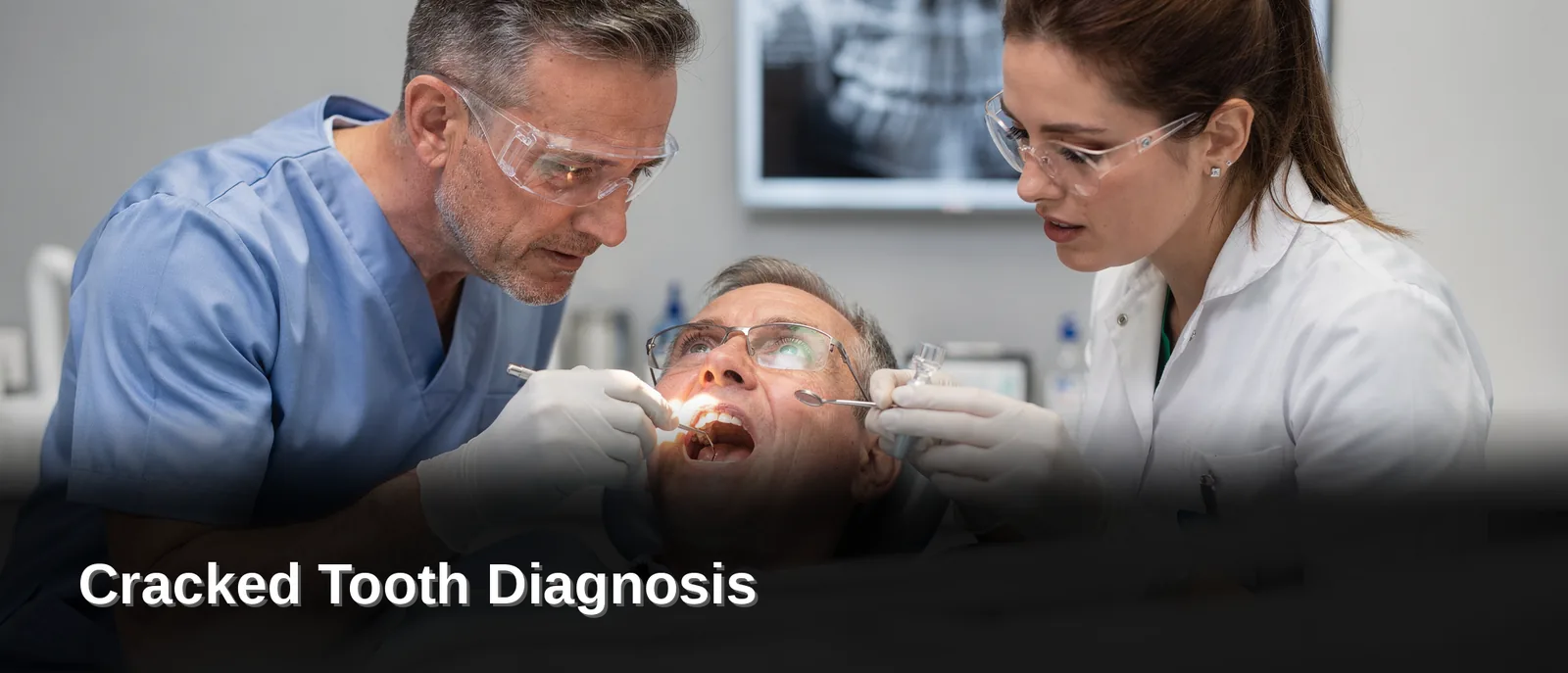
Cracked tooth syndrome detection relies on bite tests, transillumination, and dye staining rather than X-rays alone. Fracture lines stay invisible on radiographs. Refer patients showing the classic bite-and-release pain pattern to Anodyne Endodontics, where Dr. Zainab Aziz uses microscopic visualization to confirm fracture depth and determine whether the tooth is restorable.
Key Takeaways
- Cracked tooth syndrome remains significantly under-diagnosed in dentistry due to invisible fractures on X-rays.
- Sharp, fleeting pain when biting is the specific symptom pattern that identifies cracked tooth syndrome.
- Tiny cracks produce real patient symptoms despite being hidden from standard imaging and naked eye examination.
- Dentists require additional diagnostic information beyond initial examination to confirm cracked teeth with certainty.
Why Is Cracked Tooth Diagnosis So Difficult?
Hairline fractures hide from nearly every standard diagnostic tool. A crack can run too shallow for an X-ray to capture, too fine to catch with a dental explorer, and too thin for the naked eye to register. You can have real, reproducible pain and still walk away from an exam with no confirmed source. That gap between symptom and evidence is exactly what makes cracked tooth diagnosis one of the more frustrating puzzles in clinical practice.
The stakes make this worth taking seriously. The American Association of Endodontists ranks cracked teeth as the third leading cause of tooth loss in industrialized nations, trailing only gum disease and cavities. A crack left undiagnosed does not stay static; it propagates under repeated chewing forces until the tooth’s structural integrity fails.
Why do cracks evade standard imaging and exams?
Radiographs capture density differences. A fracture line often runs parallel to the X-ray beam or sits too narrow to alter the image. Visual and tactile exams miss cracks hidden beneath old restorations or below the gumline. Reliable tooth fracture detection usually requires magnification, transillumination, or bite-testing methods that go beyond a routine checkup.
What should guide your approach when the picture stays unclear?
At Anodyne Endodontics, diagnosis is never treated as an isolated data point. The practice’s philosophy centers on treating the tooth, mind, and body as one connected system. Uncertainty gets addressed with patience rather than guesswork. That mindset traces back to the practice’s own name, rooted in the idea of anything with the power to soothe and relieve pain, which shapes how ambiguous cases get evaluated rather than dismissed.
What Symptoms Signal Cracked Tooth Syndrome?
A sharp sting on biting down, followed by a second jolt of pain when you release the bite, marks the classic warning sign of a cracked tooth. That bite-and-release rhythm is widely recognized as the hallmark pattern behind cracked tooth syndrome, and recognizing it early speeds up cracked tooth diagnosis before the fracture worsens.
Most patients describe the sensation in almost identical terms: a quick, stabbing pain while chewing something firm, then a second flash of discomfort the moment pressure lifts. This two-part pattern is what separates a cracked tooth from a cavity or a simple sensitivity issue. Cavities tend to ache steadily; a cracked tooth hurts in bursts tied directly to chewing motion.
What does cracked tooth pain actually feel like?
Picture biting into something and feeling a lightning-quick sting, then a second wave of pain right as your jaw relaxes. That double signal, rather than constant aching, is the detail worth flagging to your dentist. Left unreported, this pattern often gets dismissed as ordinary sensitivity, delaying proper tooth fracture detection.
When does tooth pain mean you need urgent care?
Severe, escalating pain that disrupts eating, sleep, or daily routine usually points to a fracture reaching deeper structures. This level of pain often signals the need for urgent treatment, including root canal therapy, once the crack has reached the pulp.
Watch for these endodontic referral signs in your own experience:
- Pain isolated to one specific tooth during chewing
- A distinct two-phase sting: sharp bite, then sharp release
- Discomfort that intensifies with hard or chewy foods
- Pain severe enough to interfere with normal eating
Root canal therapy exists to relieve that pain. Preserve teeth once a crack compromises the inner pulp, restoring comfort and normal function.
Which Modern Tests Confirm Tooth Fracture Detection?
No single test confirms a fracture on its own. Your dentist builds a cracked tooth diagnosis from several combined clues rather than trusting one result in isolation. That layered approach matters because a hairline crack can hide from even careful visual exams, leaving you with real pain and no obvious explanation on the surface.
Tooth fracture detection typically draws on a mix of tools and observations:
- Bite testing: You bite down on a small stick or instrument, tooth by tooth, cusp by cusp, until one spot reproduces your familiar sharp sting.
- Transillumination: A bright light passed through the tooth reveals cracks as dark lines interrupting the glow.
- Dye staining: Special dye seeps into a crack’s edges, making it visible under magnification.
- Periodontal probing: A narrow, isolated pocket around one tooth can signal a vertical root fracture beneath the gumline.
- Magnification: A dental microscope lets your clinician see fracture lines invisible to the naked eye.
Why doesn’t an X-ray always show the crack?
X-rays capture density changes, and most fractures run parallel to the imaging angle rather than across it. That orientation problem explains why cases involving a tooth fracture invisible on imaging are common, not rare exceptions. Your dentist has to lean on the clinical exam. Your symptom pattern instead of waiting for a radiograph to confirm what your bite is already telling you.
When should you expect a referral?
Persistent bite pain with no imaging findings is one of the clearest endodontic referral signs. Anodyne Endodontics gives patients access to microscopic root canal therapy, directed by a board-certified endodontist trained in complex diagnostic cases. That level of magnification and specialty training often uncovers what a first exam could not.
What Are The Key Endodontic Referral Signs?
Persistent bite pain, unexplained sensitivity after restorative work, and inconclusive imaging all signal that a specialist evaluation is warranted. These situations sit at the edge of what routine chairside tools can confirm, and pushing forward without deeper diagnostics risks missing a fracture until it threatens the tooth’s survival. Recognizing these moments early protects your patient’s long-term outcome.
An endodontic referral sign often shows up as a mismatch between symptoms and findings. A patient reports sharp pain on release of a bite, yet the tooth looks structurally sound under a loupe. That mismatch is exactly where specialist training earns its value: an endodontist completes years of additional training focused entirely on the internal anatomy of the tooth and canal system, giving you a second, deeper layer of diagnostic scrutiny.
When should you refer instead of monitoring?
Refer promptly when canal anatomy looks complex, when the tooth has already been treated once, or when dental anxiety is limiting your ability to complete a thorough exam. These are exactly the cases where a specialist’s daily, narrow focus outperforms a general practice’s broader caseload. A general dentist manages many procedure types. An endodontist performs root canal therapy continuously, using advanced tools built for more comfortable, more predictable results.
What should you look for in a referral partner?
Look past convenience alone. Weigh specialist training and board certification, current imaging and treatment technology, a genuine comfort-focused approach, clear communication back to your practice, and reliable access for emergency cases. A partner who combines sharp clinical skill with real compassion protects both your patient’s tooth and your referral relationship. Which is exactly the standard Anodyne Endodontics holds itself to for every case that comes through the door.
How Does Early Diagnosis Save Your Tooth?
Early diagnosis saves your tooth by catching a fracture before bacteria reach the tooth’s inner tissue. Prompt cracked tooth diagnosis stops a hidden problem from turning into a root canal infection or worse, an extraction. Catching the crack early keeps your treatment options wide open.
You may feel occasional sharp pain when biting or chewing. See nothing wrong when you check your smile in the mirror. That gap between symptom and appearance is exactly why cracks go untreated for so long. A small, undetected fracture still lets bacteria slip into the tooth’s interior, and once infection sets in, your treatment window narrows fast.
Why Does Waiting Make Things Worse?
Every week you wait gives bacteria more time to travel deeper into the tooth. What starts as a minor tooth fracture detection case can progress into pulp infection, abscess, or a crack that splits the root itself. At that point, saving the tooth becomes far harder, and extraction moves from unlikely to probable.
Anodyne Endodontics stays committed to saving your natural tooth through minimally invasive techniques. Biocompatible materials whenever a crack is caught in time. As a dedicated endodontic practice serving DuPage County. The western suburbs, your treatment plan centers on calm, precise, preservation-first care rather than rushed extraction. Recognizing early endodontic referral signs, that persistent bite pain, that lingering sensitivity, gives your dentist the chance to refer you before the crack advances beyond repair.
FAQ
Why do X-rays fail to detect cracked teeth?
Fracture lines often run parallel to the X-ray beam or are too narrow to alter the image. Radiographs miss cracks that are too shallow or fine for standard imaging to capture.
What symptom pattern signals cracked tooth syndrome?
Patients feel a sharp, stabbing pain when biting down, followed by a second jolt of pain the moment they release the bite—a distinct bite-and-release rhythm unlike steady cavity pain.
How does Anodyne Endodontics confirm a cracked tooth diagnosis?
Dr. Zainab Aziz uses microscopic visualization, along with bite tests, transillumination, and dye staining, to confirm fracture depth and determine whether the tooth remains restorable.
Conclusion
In closing, modern diagnostic technologies have fundamentally transformed how general dentists detect cracked teeth, moving beyond visual inspection to reveal fractures invisible to the naked eye. Early identification through advanced imaging and diagnostic techniques prevents progression to irreversible pulp damage and preserves tooth structure. When cracks are suspected, prompt referral to an endodontist ensures comprehensive evaluation and specialized treatment planning, protecting your long-term oral health and overall well-being.