Reversible vs. Irreversible Pulpitis: What Tooth Nerve Inflammation Means
Tooth pain almost always traces back to the pulp—the living core of nerves and blood vessels inside your tooth. When that pulp becomes inflamed, the condition is called pulpitis, and understanding whether it is reversible or irreversible tells you whether the tooth can simply calm down or needs treatment to be saved. At Anodyne Endodontics in Bloomingdale, IL, Dr. Zainab Aziz helps patients across DuPage County and the western Chicago suburbs interpret these symptoms early, when teeth are easiest to preserve.
What is pulpitis?
Pulpitis is inflammation of the dental pulp, the soft tissue inside the tooth that contains its nerves and blood supply. It is usually triggered by deep decay, a crack, repeated dental work, or trauma that lets bacteria or irritation reach the pulp. Because the pulp is sealed inside hard tooth structure, even mild swelling can cause noticeable pain.
What is the difference between reversible and irreversible pulpitis?
Reversible pulpitis means the pulp is inflamed but still healthy enough to recover once the irritant is removed, so the tooth can often be saved without a root canal. Irreversible pulpitis means the pulp is too damaged to heal and will continue to decline, which usually calls for root canal therapy to remove the affected tissue and relieve the pain.
Symptoms of reversible pulpitis
With reversible pulpitis, you typically feel a quick, sharp twinge in response to cold, sweet, or sometimes hot foods—but the discomfort fades within a few seconds once the trigger is gone. There is no spontaneous pain and no ache that lingers. Treating the underlying cause, such as filling a new cavity or adjusting a high bite, often lets the nerve settle and the tooth return to normal.
Symptoms of irreversible pulpitis
Irreversible pulpitis tends to announce itself with pain that lingers long after a hot or cold trigger, pain that arrives on its own, or a deep throb that can keep you up at night. Some people notice the tooth hurts more when they lie down. These are signs the pulp is dying, and they are also signs you should be evaluated soon—our article on 7 signs you may need a root canal describes the warning signals in more detail. Left untreated, irreversible pulpitis can progress to an infection or abscess.
How is pulpitis diagnosed and treated?
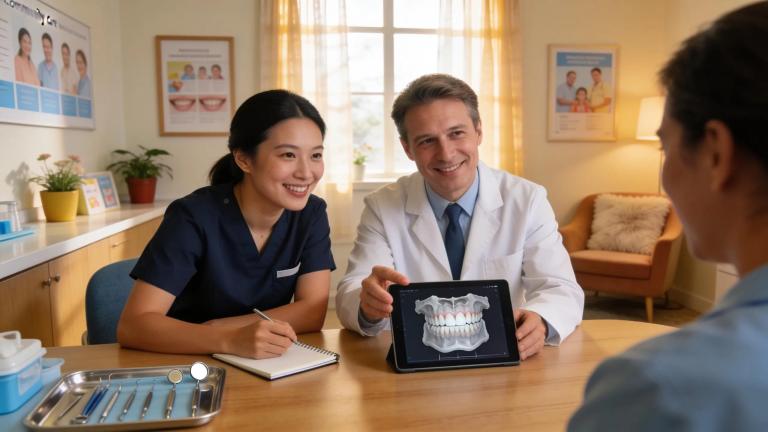
Diagnosis combines your history, sensitivity and percussion testing, and imaging. Dr. Aziz uses 3D CBCT imaging to see cracks, hidden canals, and the extent of inflammation that a standard X-ray can miss. Reversible pulpitis is managed conservatively by treating the cause. Irreversible pulpitis is treated with root canal therapy, which removes the inflamed pulp, disinfects the canals, and seals the tooth—preserving your natural tooth rather than removing it.
Why early evaluation protects your natural tooth
Caught early, an inflamed pulp gives you more options and a calmer path forward. Waiting until pain becomes constant often means the difference between a routine root canal and a more complex problem. Our preservation-first, biological approach favors the least-toxic materials and the maximum amount of healthy tooth structure, so acting early genuinely pays off for the life of the tooth.
Common Questions About Pulpitis
Can pulpitis go away on its own?
Reversible pulpitis can settle once the irritant—such as a new cavity, a recent filling, or grinding—is addressed, because the nerve is inflamed but still healthy. Irreversible pulpitis does not heal on its own; the pulp cannot recover, and the tooth typically needs a root canal to remove the damaged tissue and stop the pain.
How do I know if my pulpitis is reversible or irreversible?
Reversible pulpitis usually causes brief sensitivity that fades quickly after a hot or cold trigger is removed. Irreversible pulpitis causes lingering, spontaneous, or throbbing pain that may keep you awake or worsen with heat. Only an exam with testing and imaging can confirm which you have, so it is best to be evaluated promptly.
Is a root canal the only treatment for irreversible pulpitis?
For a tooth worth saving, root canal therapy is the standard treatment because it removes the inflamed pulp while preserving the natural tooth. The alternative is extraction, which leaves a gap that often needs an implant or bridge. Saving the natural tooth is usually the healthier, more economical long-term choice.
Schedule a Consultation in Bloomingdale, IL
If you have lingering tooth sensitivity or pain, do not wait for it to worsen. Anodyne Endodontics serves Bloomingdale, DuPage County, and the western Chicago suburbs. Call (659) 266-3963 (659-266-3963) or visit our contact page to schedule an evaluation.