A cracked tooth diagnosis requires a clinical exam and often a 3D CBCT scan to detect hidden fracture lines. Anodyne Endodontics, led by board-certified endodontist Dr. Zainab Aziz, uses microscopic root canal therapy to save your natural tooth when the crack has not extended below the gumline.
Key Takeaways
- A cracked tooth diagnosis requires a clinical exam and often a 3D CBCT scan to detect hidden fracture lines.
- Bite tests isolate the problem, as pain upon release often points to a cracked tooth flexing and irritating the pulp.
- A crack reaching the pulp chamber exposes nerves and blood vessels to bacteria, leading to infection without treatment.
- Delaying care allows cracks to propagate further into the root, risking abscess formation and bone loss.
What is a cracked tooth?
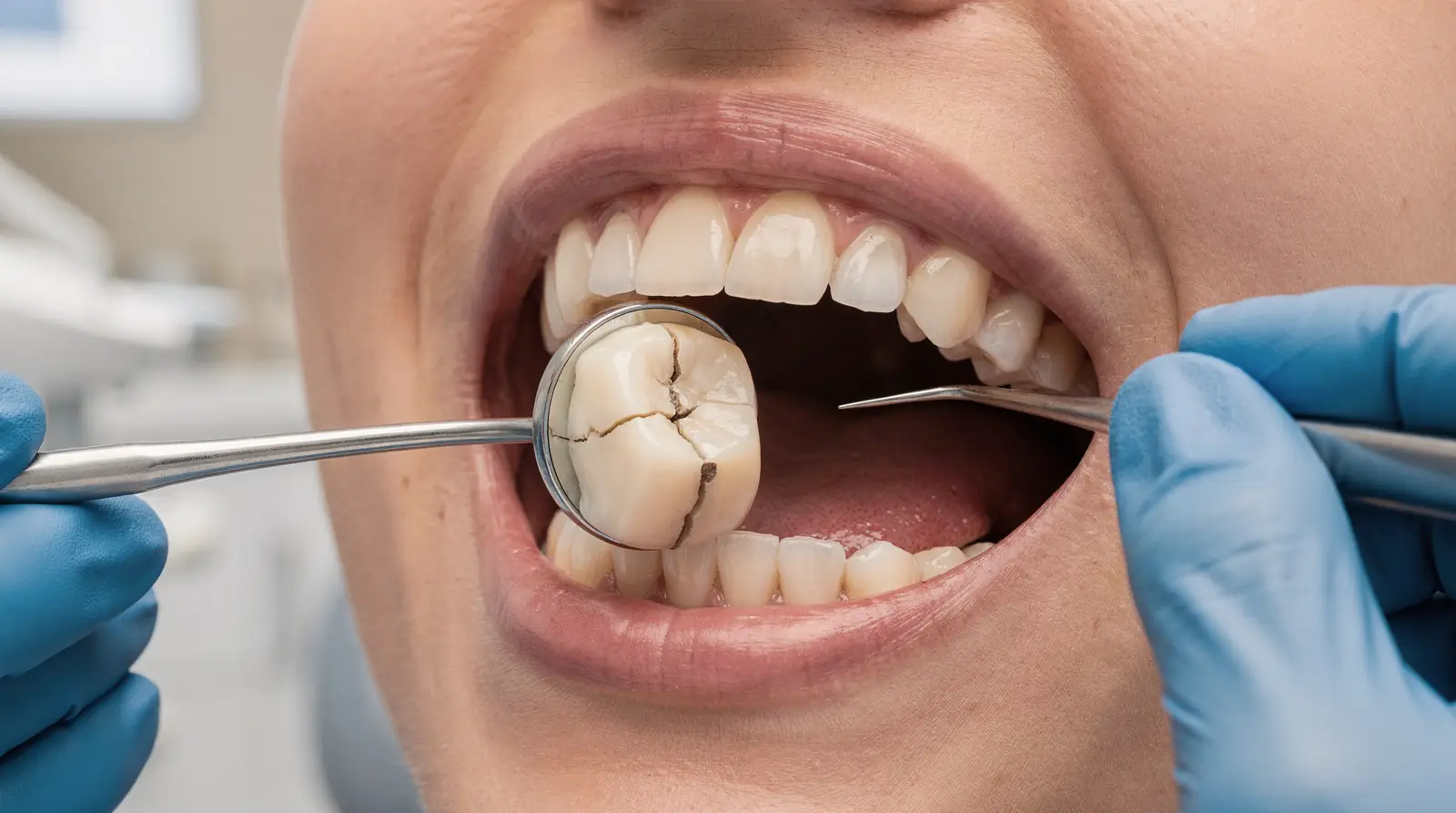
A cracked tooth is an incomplete fracture through the enamel and sometimes into the dentin or pulp of a tooth. This damage creates a pathway for bacteria and temperature changes to irritate the sensitive inner structures.
Cracks develop from several common causes. Traumatic events, chronic teeth grinding, or biting down on hard objects all produce enough force to split tooth structure. Without treatment, these fractures lead to tooth sensitivity, persistent pain, and eventually infection. The symptoms vary widely. You might notice erratic pain when chewing your food. Sudden sharp discomfort often strikes when the tooth contacts very hot or cold temperatures. The pain frequently comes and goes, making the problem frustrating to pin down.
Why is a cracked tooth so hard to diagnose?
Your general dentist may struggle to locate the exact tooth causing your discomfort. The intermittent nature of the pain and the microscopic size of many cracks complicate a standard visual exam. A specialist trained in tooth fracture diagnosis uses advanced imaging and specific bite tests to identify the fracture location and depth. An endodontist completes years of additional training devoted entirely to the inside of the tooth and root canal therapy. This focused expertise proves essential when cracks extend below the gumline or into the root.
How does a crack lead to needing a root canal?
A crack that reaches the pulp chamber exposes the tooth’s nerve and blood supply to bacteria. The resulting inflammation and infection require a precise root canal diagnosis to determine whether the tooth can be saved. Cracked tooth syndrome describes this exact pattern of symptoms. The sooner a specialist evaluates the fracture, the better the outcome for preserving your natural tooth.
How is a tooth fracture diagnosis made?
A tooth fracture diagnosis begins with a detailed conversation about your symptoms and dental history. Your dentist or endodontist asks targeted questions about when the pain started, what triggers it, and any recent injuries or habits like grinding. This clinical interview narrows the possibilities before any instrument touches your tooth.
Next comes a physical examination of the affected tooth and surrounding gum tissue. The provider looks for visible crack lines, swelling, or inflammation that signals deeper damage. Bite tests isolate the problem. You bite down on a small tool, then release. Pain upon release often points to a cracked tooth because the separated segments flex and irritate the inner pulp. Transillumination, where a bright light shines through the tooth, reveals fractures that remain invisible under normal lighting.
What makes an endodontist’s diagnosis more accurate?
A qualified endodontist specialist provides the most accurate assessment of the damage. Endodontists complete years of additional training focused exclusively on the tooth’s interior. They use operating microscopes that magnify the tooth structure, revealing hairline fractures a general exam misses. This precision determines whether root canal diagnosis confirms the tooth can be saved.
How does crack location affect the diagnosis?
Endodontists specialize in saving cracked teeth and will cater treatment to the type, location, and extent of the crack. A crack confined to the crown behaves differently than one extending below the gum line. The specialist maps the fracture’s path before recommending intervention. Anodyne Endodontics, a dedicated endodontic practice serving DuPage County and the western Chicago suburbs, focuses on saving natural teeth with calm, precise, preservation-first treatment. Advanced imaging and modern tests for dentists confirm fracture depth and guide the decision between a root canal or alternative care.
When is a root canal diagnosis necessary?
A root canal diagnosis becomes necessary when a tooth crack extends into the pulp chamber. The pulp contains nerves and blood vessels that sustain the tooth. Once bacteria reach this inner tissue through a fracture, infection follows. Without treatment, you risk losing the tooth entirely.
The treatment solution depends on how serious the crack is and where it exists in the tooth structure. Proper treatment for minimal cracks may include cosmetic measures only. Deeper tissue-impacting cracks will need root canal therapy. This distinction matters because delaying care allows cracks to propagate further into the root.
What symptoms indicate a cracked tooth needs a root canal?
Sharp pain when biting down and lingering sensitivity to hot or cold often signal pulp involvement. The pain may come and go, making the source difficult to pinpoint. Swelling around the affected tooth points to infection that demands immediate evaluation.
How does crack location affect the diagnosis?
Cracks confined to the enamel rarely require endodontic intervention. Fractures that split into the dentin or extend below the gumline create a pathway for bacteria. A thorough tooth fracture diagnosis uses advanced imaging to map the crack’s depth and trajectory. This precision determines whether the tooth can be saved.
Root canal diagnosis confirms that the pulp is inflamed or infected beyond recovery. Root canal therapy represents a specialized procedure aimed at salvaging natural teeth facing severe damage. This treatment not only alleviates pain but also helps maintain the aesthetics and functionality of teeth. A detailed cracked tooth repair evaluation identifies which fractures respond to endodontic care and which require extraction.
Can a cracked tooth heal without a root canal?
Superficial craze lines in the enamel rarely need treatment at all. However, any crack that causes symptoms has already compromised the tooth’s structural integrity. Waiting for the pain to subside permanently invites abscess formation and bone loss around the root. Early intervention preserves more of your natural tooth structure.
Can a root canal save a cracked tooth?
A root canal often saves a cracked tooth, provided the fracture has not extended below the gumline or split the tooth completely. The treatment removes infected pulp, seals the interior, and restores the tooth to full function. Without prompt care, a small crack deepens. Bacteria invade the inner chamber. What begins as temperature sensitivity escalates into infection and, ultimately, tooth loss.
Cracked tooth symptoms vary widely. You might feel sharp pain when you release a bite, not when you bite down. Hot coffee or ice water can trigger a sudden, fleeting ache. Swelling around the affected tooth signals that inflammation has already set in. These symptoms come and go, making the problem difficult to pinpoint without a specialist’s evaluation.
How does a root canal stop the damage?
The procedure halts the progression of a tooth fracture diagnosis by removing the compromised tissue at the center of the tooth. A crack creates a pathway for bacteria to reach the pulp. Once infection takes hold, the pulp dies. A root canal diagnosis confirms whether the pulp is inflamed or necrotic. Cleaning and sealing the canals eliminates the infection and prevents it from spreading into the surrounding bone.
What happens after treatment?
Once treated, most cracked teeth continue to function for many years of pain-free biting and chewing. The sooner your tooth receives care, the better the outcome for preserving the natural tooth. A dental crown typically covers the tooth afterward, holding the structure together and distributing bite forces evenly. This final restoration is essential. Without it, the crack can propagate under chewing pressure.
Delaying treatment allows the crack to worsen. The American Association of Endodontists emphasizes that treating a cracked tooth quickly prevents the problem from escalating. A board-certified endodontist like Dr. Zainab Aziz uses microscopic technology to visualize fracture lines invisible to the naked eye. This precision supports accurate diagnosis and conservative treatment. Saving your natural tooth through root canal therapy avoids extraction and the cascade of complications that follow a missing tooth.
What happens during root canal treatment?
Root canal treatment removes infected tissue from inside a tooth. The procedure stops pain and preserves your natural tooth structure. Severe tooth pain often signals the need for this urgent dental intervention. Without treatment, the infection spreads and you risk losing the tooth entirely.
Root canal diagnosis begins with a thorough examination. Your endodontist evaluates symptoms, takes digital images, and identifies the exact source of discomfort. A cracked tooth or deep decay typically allows bacteria to reach the pulp. This inner tissue becomes inflamed and eventually dies.
How does the procedure relieve pain?
The endodontist numbs the area completely before starting. A small opening provides access to the damaged pulp. Specialized instruments remove infected tissue and clean the root canals. The space is then filled and sealed to prevent reinfection.
What technology improves treatment outcomes?
Advanced imaging and microscopic visualization guide every step. These tools help the endodontist treat complex anatomy that general dentists might miss. The goal remains consistent: alleviate pain and save infected teeth so you regain comfort and functionality. Most patients return to normal activity the following day.
A permanent restoration, usually a crown, protects the treated tooth afterward. This final step restores full chewing strength. The entire process reflects core values of compassion, accuracy, reliability, and education. Root canal therapy in Bloomingdale, IL combines advanced technology with compassionate care for optimal patient outcomes.
FAQ
How does a cracked tooth lead to needing a root canal?
A crack reaching the pulp chamber exposes the tooth’s nerve and blood supply to bacteria, causing inflammation and infection that requires root canal therapy.
What tools does an endodontist use to diagnose a cracked tooth?
An endodontist uses a clinical exam, 3D CBCT scan, bite tests, and transillumination to detect hidden fracture lines and diagnose the crack.
Why is a cracked tooth hard for a general dentist to diagnose?
The intermittent pain and microscopic size of many cracks complicate a standard visual exam, requiring a specialist’s advanced imaging and bite tests.
Conclusion
A cracked tooth diagnosis that confirms pulp involvement points to one clear next step: root canal therapy. The procedure removes the infected tissue, seals the interior, and preserves the natural tooth, provided the fracture has not extended below the gumline. Acting promptly stops the crack from deepening and prevents the infection from spreading into the surrounding bone. Early evaluation by a specialist determines whether the tooth is savable, so schedule that examination without delay.